


Assembly Polls 2026: BJP’s Bengal Win, Vijay’s Rise, And The Misinformation Trail
The 2026 Assembly polls saw historic shifts. BOOM tracked a parallel surge of misinformation; from edited videos and recycled visuals to AI-generated content.

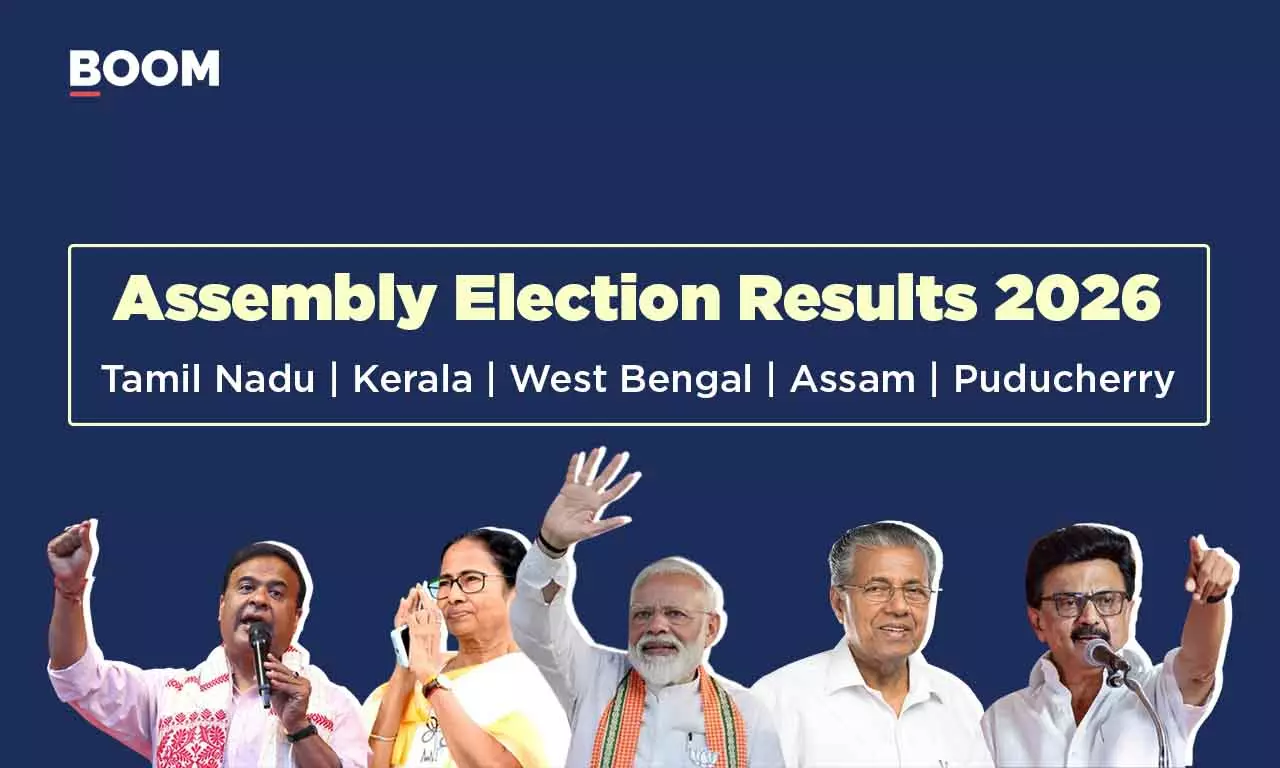
The counting on May 4 confirmed what many polls had pointed toward but few had predicted with such completeness: three sitting governments fell on the same day. Mamata Banerjee, Pinarayi Vijayan, MK Stalin — all out.
The BJP replaced the TMC in West Bengal. The Congress replaced the Left in Kerala. In Tamil Nadu, a two-year-old party led by film star Vijay replaced the DMK. Himanta Biswa Sarma held Assam. N. Rangasamy held Puducherry.
Meanwhile, the Communist Party of India (Marxist)-led Left finds itself without a government in any state for the first time in decades—losing Kerala after two terms and marking the end of its last remaining stronghold.
But the results cannot be read in isolation from what preceded them.
Across all five regions, BOOM tracked edited videos, recycled photos, and false numbers running alongside the polls, a pattern that has become a fixture of Indian electoral cycles since at least 2019, and one that grew more sophisticated this time with the deployment of AI-generated content at scale.
West Bengal: BJP Ends 15-Year TMC Rule
In West Bengal, the Bharatiya Janata Party secured a decisive victory, winning 207 seats in the 294-member Assembly. While the halfway mark stands at 148, polling in one constituency was countermanded, bringing the effective majority mark down to 147 for 293 seats.
In 2021, the All India Trinamool Congress had won 213 seats and returned Mamata Banerjee to power after one of the most closely watched elections in recent memory. This time, the party was reduced to 80.
Suvendu Adhikari, who had himself defected from the TMC before the 2021 election and lost to Banerjee in Bhabanipur, defeated her in the same constituency by over 15,000 votes.
The win came on the back of a historically high turnout. The election recorded a voter turnout of 92.93%, the highest ever in the state, surpassing the 2011 election that ended 34 years of Left Front rule.
That figure, however, sits uncomfortably alongside the controversy that defined the campaign's opening weeks. The Special Intensive Revision of electoral rolls removed around 9 million voters from the rolls in West Bengal, representing about 12% of the electorate. The scale of the deletions made the SIR one of the central disputes of the election.
Trinamool Congress said the exercise risked disenfranchising genuine voters, while the BJP defended it as a revision of bogus entries and illegal migrants. The issue went under judicial scrutiny during the campaign.
The Supreme Court invoked Article 142 to direct the Election Commission to issue supplementary rolls for those who successfully appealed their removal. The relief, however, was minimal. Of over 9 million deleted voters, only a fraction were restored before polling day—with the first phase having already taken place by the time most tribunal decisions came through.
Activists had also flagged a structural problem with Form 7, the mechanism through which voter names can be objected to and removed. Demands for transparency about who was filing complaints went unanswered, with the Election Commission declining to disclose that information. The information environment around the election was consistently polluted.
BOOM debunked a string of viral claims during the campaign period, including a purported CCTV image showing former BJP MP Locket Chatterjee at a TMC office. BOOM found the image was AI-generated, with multiple detection tools flagging it as synthetic. Hive returned a 99.9% likelihood of AI generation.
BOOM also found that a video purportedly showing security forces lathi-charging people in West Bengal was in fact from Bangladesh. The footage, traced to a Facebook page called Law TV, was from February 2026 — during Bangladesh's 13th parliamentary election — and showed a Bangladeshi vehicle number plate written in Bengali script, not the Latin script mandated for Indian vehicles.
Post-result, the violence was real. TMC offices were vandalised across multiple districts. Clashes broke out at the Asansol counting centre.
Central Armed Police Forces carried out lathi-charges in parts of Cooch Behar amid tensions. Meanwhile, BOOM continued to track misinformation through counting day, including an old video of a Holi celebration on Kolkata’s Howrah Bridge that was falsely shared as visuals of Bharatiya Janata Party supporters celebrating early leads.
In a post on X, Kolkata Police warned about misleading content falsely linked to Kolkata after election results, saying it is monitoring such posts. It urged citizens not to share unverified information, adding that the situation remains under control.
Meanwhile, Rahul Gandhi, echoing Mamata Banerjee's allegations on the day of results, posted on X that over 100 seats had been stolen in Bengal.
Assam: A Third Term and a Coordinated AI Architecture
In Assam, the NDA retained power comprehensively—102 of 126 seats, with the BJP alone winning 82. Congress finished with 19 seats, its worst performance in the state since 2016. Congress president Gaurav Gogoi, a three-time MP, lost his first-ever election in Jorhat.
The campaign Himanta Biswa Sarma ran to secure this mandate had attracted significant attention well before voting day. It saw a sharp communal polarisation this year, with repeated references to “illegal immigrants” and targeting of minority communities. Speeches by the incumbent CM drew criticism from opposition parties as divisive, including remarks about removing “Miya voters”.
During the campaign, the BJP shared — and later deleted — an AI-generated video depicting Sarma shooting at images of two Muslim men, with the caption "No Mercy". Sarma subsequently defended it as "symbolic". The Supreme Court declined to hear petitions on the matter directly, routing complainants to the Guwahati High Court.
That incident was not isolated. BOOM reported on a study by the Netherlands-based DAHRD foundation documenting the scale of AI-generated content circulating ahead of the Assam election. Between November 2025 and early April 2026, at least 432 AI-generated posts were shared across Facebook and Instagram, collectively drawing over 45 million views and more than 100,000 likes.
The report described what it called a "six-tier content factory" — a coordinated pipeline of 273 accounts with a combined reach of over 400 million, designed to push political narratives at scale. Pages linked to leaders like Assam Chief Minister Himanta Biswa Sarma fed into party pages, friendly media outlets and local networks before content moved into WhatsApp groups.
A significant share of the content targeted Congress leader Gaurav Gogoi — deepfake-style clips showing him reciting Pakistan's national anthem on Republic Day, or appearing alongside Pakistan Army Chief General Asim Munir.
The Instagram account Politooons alone generated 40.2 million views — 88% of all AI content tracked — across 102 posts. Most posts carried no AI disclosure, despite visible artefacts.
Gogoi lost his seat. Whether the volume of AI disinformation contributed to the margin of his defeat cannot be established with certainty. That it reached tens of millions of people before polling day is documented.
Assam and Bengal are clear cases of the election being stolen by the BJP with the support of the EC.
— Rahul Gandhi (@RahulGandhi) May 4, 2026
We agree with Mamata ji. More than 100 seats were stolen in Bengal.
We have seen this playbook before:
Madhya Pradesh.
Haryana.
Maharashtra.
Lok Sabha 2024 etc
चुनाव चोरी,…
Tamil Nadu: Vijay and the Manufactured Wave
Tamil Nadu delivered the most unexpected result of the five. TVK, founded by film star Vijay in 2024, ended 58 years of DMK-versus-AIADMK politics in one cycle.
The party won 108 seats in the 234-member Assembly, short of the 118 needed for a majority, but enough to displace both the DMK (59 seats) and the AIADMK (47) as the single largest party.
The most direct symbol of how much had changed: MK Stalin, a nine-term MLA who had been in the Assembly continuously since 1996, lost the Kolathur seat to TVK's V.S. Babu by nearly 15,000 votes.
Babu polled 88,180 votes, defeating Stalin, who secured 72,988 votes.
மக்கள் தீர்ப்பைத் தலைவணங்கி ஏற்கிறோம். வெற்றி பெற்றவர்களுக்கு வாழ்த்துகள்!
— M.K.Stalin - தமிழ்நாட்டை தலைகுனிய விடமாட்டேன் (@mkstalin) May 4, 2026
கடந்த ஐந்தாண்டு காலத்தில் ஏராளமான திட்டங்களை உருவாக்கி, தமிழ்நாட்டு மக்களுக்கு நல்லாட்சியை வழங்கினோம். தமிழ்நாட்டை அனைத்து வகையிலும் உயர்த்தினோம். தேர்தல் களத்தில் எங்களது சாதனைகளைச் சொல்லியே வாக்குகளைக்… pic.twitter.com/CCsVdwJX0A
The information environment around the Tamil Nadu campaign had its own texture. A fake Frontline magazine cover predicting a "Vijay wave" in Tamil Nadu circulated widely on X and Facebook ahead of the April 23 polling day. BOOM found that Frontline had published no such issue, and the magazine itself put out a public note flagging the cover as fabricated and attributing its spread to TVK supporters.
The irony of a party that would go on to actually win big being associated with fake hype is worth noting — the manufactured wave preceded a real one.
TVK now needs to negotiate to form or support a government, holding 108 seats against a majority mark of 118.
Kerala: Left Loses Its Last State
In Kerala, the Congress-led United Democratic Front won 102 of 140 seats, returning to power after the LDF's two consecutive terms. The LDF, under Pinarayi Vijayan, ended with 35 seats.
The victory of the UDF was anchored by the Indian National Congress, which won 63 seats, along with key allies such as the Indian Union Muslim League with 22 seats, and other Kerala Congress factions.
The BJP, on the other hand, improved its tally securing victories in Nemom, Kazhakuttam and Chathannoor. In Nemom, BJP State president Rajeev Chandrasekhar won by a margin of 4,165 votes against LDF minister V. Sivankutty.
The political significance of this result reaches beyond Kerala's borders. With Kerala gone, the Left holds no state government in India for the first time since 1957. What began decades ago with the loss of West Bengal, and continued through Tripura, ends here. The Indian Left governs no state.
Amid the political churn, misinformation also surfaced online.
AI-generated images of Narendra Modi were circulated as behind-the-scenes visuals from his campaign in Assam and Kerala, falsely suggesting staged interactions. One image showed him with women workers surrounded by a large camera crew, while another depicted him in a mundu holding coconuts under a tree.
BOOM found both images to be AI-generated. Google’s SynthID tool flagged them as AI-created or edited, with the Kerala image also carrying a visible Gemini watermark.
CPI(M) Polit Bureau statement on the Assembly Election Results #electionresult2026 pic.twitter.com/am6OxAEFo9
— CPI(M) Kerala (@CPIMKerala) May 4, 2026
Puducherry: NDA Alliance Holds Ground
In Puducherry, the NDA alliance retained power with 18 seats in the 30-member Assembly, comfortably crossing the halfway mark of 16. The alliance was led by the All India N.R. Congress (AINRC), which emerged as the dominant partner with 12 seats.
The BJP won four seats, while the All India Anna Dravida Munnetra Kazhagam (AIADMK) and Latchiya Jananayaga Katchi (LJK) secured one seat each.
AINRC leader and Puducherry chief minister N. Rangasamy was re-elected from Thattanchavady by a margin of 4,441 votes, securing a historic fifth term.
On the other side, the Dravida Munnetra Kazhagam (DMK), contesting as part of the Congress-led INDIA bloc, won five seats—one less than its previous tally.
புதுச்சேரிக்கு நன்றி!
— Narendra Modi (@narendramodi) May 4, 2026
எங்களது சிறந்த நல்லாட்சி சாதனைகள் அடிப்படையிலும், திரு என். ரங்கசாமி தலைமையிலான அரசின் செயல்பாடுகள் அடிப்படையிலும், புதுச்சேரி மக்கள் தேசிய ஜனநாயகக் கூட்டணிக்கு மற்றொரு ஆட்சிக்காலத்தை வழங்கியுள்ளனர். இந்த வாழ்த்துகள், நல்லாட்சியை மேலும் மேம்படுத்த எங்களின்…
What the 2026 results produce, taken together, is a significant and multi-directional realignment. This was not a wave for any single party. It was a wave against incumbency — three different parties replaced three different incumbents on the same day.
But the processes that shaped these outcomes — voter roll deletions that reached the Supreme Court, AI content factories with nine-figure view counts, opaque Facebook ad networks running into crores, and viral misinformation that BOOM tracked and debunked— deserve scrutiny in their own right.


